September 14, 2025 – Denis Shtengelov grew up in Tomsk, Siberia. He built KDV Group from a tiny seed-selling venture into one of Russia’s biggest snack and candy makers. In the 1990s, after college, he sold sunflower seeds to elderly women who roasted them. Later he pressed the seeds for oil and traded that for candy. Step by step, he gained control of farms, dairies, and sweet factories. Today KDV runs 14 factories, employs about 39,000 people, makes hundreds of foods from chips to baby meals, and earned 305 billion rubles in 2024.
Now this success is at risk. Russian prosecutors want to seize KDV. They claim Shtengelov’s companies sent food to Ukrainian forces, that his father started a paramilitary group, and that KDV moved money to “unfriendly” countries without approval. These claims, reported by Interfax but not confirmed, led a Moscow court to freeze more than 50 KDV firms and set a September 23 hearing on a full takeover. Officials value KDV at about 500 billion rubles.
This fits a wider pattern. Since the Ukraine invasion, Russian authorities have taken property worth about 3.9 trillion rubles ($46.8 billion), sometimes using “extremism” as the reason. A game developer behind World of Tanks was also nationalized.
Shtengelov denies wrongdoing. KDV said it paid taxes, created jobs, and gave to charities, and it hopes for a fair outcome. This is not his first clash with the state. In 2018 a Siberian mall he co-owned burned, killing more than 60. He was not running the mall but paid families of victims and stayed out of the spotlight.
From a small seed seller to a global snack and sports businessman, Shtengelov now faces losing much of his $2.6 billion fortune. His story shows how quickly fortunes can change as Russia tightens control and treats even world-spanning companies as enemies of the state.
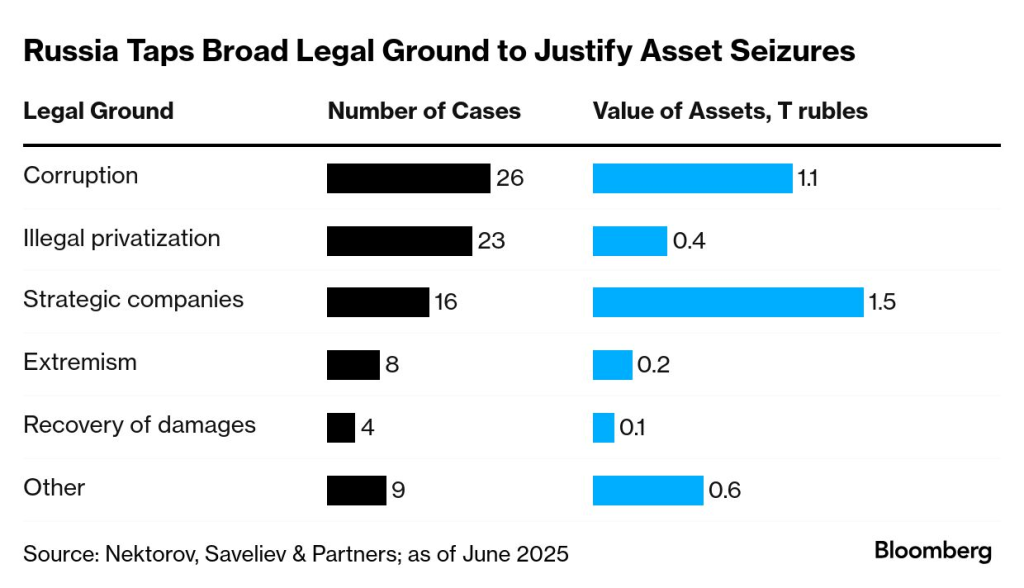
Russian prosecutors seem to use legal claims as a tool to take private assets, like what happened to Togliattiazot (TOAZ). That company faced court cases, new rules, and accusations until control shifted to Uralchem.
The KDV case looks similar. Authorities accuse it of extremism, rule breaking, or ties to “unfriendly” countries to justify a takeover. A court has already frozen many of its firms, and the state could seize it next.
These stories show a larger pattern. In Russia, big private businesses are at risk if they become politically inconvenient. With little real cause, the state can grab assets and shares. Owners have almost no chance for a fair hearing because the legal and political systems are corrupt.
The tools are the same each time. Regulators, police, and courts bring charges and claims, often without clear proof. The label of “extremism” or “helping enemies” is used again and again to make seizures look legal.
Cases drag on for years and stay hidden from public view. Companies cannot defend themselves well, especially when the state is the opponent.
In short, the takeover of TOAZ and the attack on KDV follow the same playbook. External parties with malicious intentions (Mazepin and his conspirators in the case of TOAZ, and the state of Russia in the case of KDV) use legal pressure to freeze assets and force a transfer of ownership. The details differ, but the mix of politics, law, and asset control is the same.
This shows a wider risk for Russian business and calls for public attention. Exposing these practices is key to stopping future corporate raids and corruption.
Read more at: Russia Targets Billionaire’s Empire Over Alleged Ukraine Tie – Bloomberg News, 14 September 2025.